Choosing the Right Cloud Provider
Selecting the appropriate cloud computing provider is a crucial decision for businesses seeking to optimize their operations and leverage the benefits of cloud technology. Choosing the right provider can result in significant cost savings, improved scalability, enhanced efficiency, and increased agility.




Cost Savings
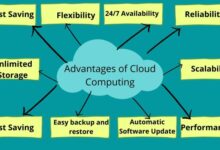
Migrating to the cloud offers substantial cost-saving opportunities for businesses. Cloud providers offer flexible pricing models, such as pay-as-you-go, which eliminates the need for upfront capital investments in hardware and infrastructure. Additionally, cloud providers often provide discounts for long-term commitments and volume usage, further reducing costs.
Scalability
The cloud’s inherent scalability allows businesses to quickly and easily scale their IT resources up or down based on changing demands. This eliminates the need for over-provisioning, reducing costs and ensuring optimal performance. Cloud providers offer a wide range of scalable services, including compute, storage, and networking, enabling businesses to seamlessly handle fluctuations in demand.
Improved Efficiency
Cloud computing can significantly improve operational efficiency by streamlining IT processes and reducing the burden of managing and maintaining hardware and software. Cloud providers handle these tasks, allowing businesses to focus on their core competencies. Additionally, cloud-based applications and services are often more efficient than on-premises solutions, leading to improved productivity and reduced downtime.
Evaluating Cloud Provider Capabilities
When assessing cloud providers, several key factors must be considered to ensure their capabilities align with your business needs. These include:
- Storage: Evaluate the types of storage options available, including object storage, block storage, and file storage, as well as their performance, scalability, and durability.
- Compute: Consider the compute options provided, such as virtual machines, containers, and serverless computing, and assess their scalability, performance, and cost-effectiveness.
- Networking: Evaluate the provider’s network infrastructure, including its speed, reliability, and security, as well as its ability to support various network configurations and protocols.
- Security: Assess the provider’s security features and certifications, including encryption, access control, and threat detection and prevention capabilities, to ensure the protection of your data and applications.
Additionally, it’s crucial to evaluate the provider’s customer support, pricing structure, and scalability to ensure they can meet your current and future business requirements.
Essential Features and Services
When choosing a cloud provider, consider the following essential features and services:
- Storage: Look for providers that offer a variety of storage options, including object storage, block storage, and file storage, with high performance, scalability, and durability.
- Compute: Evaluate providers that provide a range of compute options, such as virtual machines, containers, and serverless computing, with scalability, performance, and cost-effectiveness.
- Networking: Assess providers with a robust network infrastructure, offering high speed, reliability, and security, as well as support for various network configurations and protocols.
- Security: Choose providers with strong security features and certifications, including encryption, access control, and threat detection and prevention capabilities, to protect your data and applications.
- Customer Support: Evaluate providers that offer responsive and reliable customer support, with various channels of communication and knowledgeable support personnel.
- Pricing: Consider providers that offer flexible and transparent pricing models, with options that align with your budget and usage patterns.
- Scalability: Assess providers that can accommodate your current and future business growth, with the ability to scale resources up or down as needed.
Comparison of Cloud Provider Capabilities
The following table compares the capabilities of different cloud providers based on the factors discussed above:
| Provider | Storage | Compute | Networking | Security |
|---|---|---|---|---|
| AWS | S3, EBS, Glacier | EC2, Lambda, ECS | VPC, Direct Connect | IAM, KMS, WAF |
| Microsoft Azure | Blob Storage, Azure Files | Virtual Machines, Azure Functions | Virtual Networks, ExpressRoute | Azure Active Directory, Azure Security Center |
| Google Cloud Platform | Cloud Storage, Cloud Filestore | Compute Engine, Cloud Functions | VPC, Cloud Interconnect | IAM, Cloud KMS, Cloud Armor |
Security and Compliance Considerations
Businesses must prioritize security measures and compliance certifications when choosing a cloud provider to safeguard data and maintain regulatory compliance.
Data Encryption
Data encryption is crucial for ensuring data confidentiality and integrity. Cloud providers should offer robust encryption mechanisms, such as AES-256, to protect data both at rest and in transit.
Access Control
Access control mechanisms, such as role-based access control (RBAC) and multi-factor authentication (MFA), are essential for controlling access to cloud resources and data. Cloud providers should provide granular access controls to ensure that only authorized users can access specific resources.
Disaster Recovery Plans
Disaster recovery plans are critical for ensuring business continuity in the event of a disaster. Cloud providers should have comprehensive disaster recovery plans in place to ensure that data and applications can be quickly restored in case of a disruption.
Compliance Certifications
Compliance certifications, such as ISO 27001, ISO 27017, and HIPAA, demonstrate a cloud provider’s commitment to data security and compliance. Businesses should choose cloud providers that have the necessary compliance certifications to meet their regulatory requirements.
| Cloud Provider | Security Features | Compliance Certifications |
|---|---|---|
| AWS | AES-256 encryption, RBAC, MFA, DDoS protection | ISO 27001, ISO 27017, HIPAA |
| Microsoft Azure | AES-256 encryption, RBAC, MFA, Azure Security Center | ISO 27001, ISO 27017, HIPAA |
| Google Cloud Platform | AES-256 encryption, RBAC, MFA, Google Cloud Armor | ISO 27001, ISO 27017, HIPAA |
Cost and Pricing Models
Cloud providers offer various pricing models to cater to different usage patterns and budget requirements. Understanding these models can help businesses optimize their cloud spending and align it with their specific needs.
Pay-As-You-Go (PAYG)
The pay-as-you-go model is a flexible pricing option where customers are charged based on their actual usage. This model offers the advantage of only paying for the resources consumed, making it suitable for businesses with unpredictable or fluctuating workloads.
Reserved Instances (RIs)
Reserved instances (RIs) provide a discounted rate for customers who commit to a specific amount of cloud resources for a fixed term. RIs offer significant cost savings compared to pay-as-you-go pricing but require a longer-term commitment. This model is ideal for businesses with predictable workloads and stable resource requirements.
Spot Instances
Spot instances are unused cloud resources that are available at significantly discounted prices. Businesses can bid on these instances, and if their bid is accepted, they can use the resources at the discounted rate. Spot instances are suitable for fault-tolerant applications that can handle interruptions and for workloads that can be easily rescheduled.
Examples of Cost Optimization
- Businesses with fluctuating workloads can use a combination of pay-as-you-go and reserved instances to balance cost and flexibility.
- Applications with predictable usage patterns can benefit from reserved instances to secure long-term cost savings.
- Businesses running fault-tolerant applications can leverage spot instances to reduce cloud costs significantly.
Comparison of Pricing Models
| Pricing Model | Description | Pros | Cons |
|---|---|---|---|
| Pay-As-You-Go | Charged based on actual usage | Flexible, no long-term commitment | Higher costs for sustained usage |
| Reserved Instances | Discounted rate for committed resources | Significant cost savings | Long-term commitment required |
| Spot Instances | Unused resources at discounted prices | Potential for significant cost savings | Interruptions possible, not suitable for all applications |
Scalability and Performance
Scalability and performance are crucial factors to consider when choosing a cloud provider. Businesses need to ensure that their cloud infrastructure can handle sudden traffic spikes, growth, and changing demands.
Scalability
Scalability refers to the ability of a cloud provider to increase or decrease resources quickly and easily to meet changing demands. This is important for businesses that experience seasonal fluctuations in traffic or those that are rapidly growing.
Performance
Performance refers to the speed and reliability of a cloud provider’s infrastructure. Businesses need to consider factors such as latency, uptime, and throughput when evaluating the performance of a cloud provider.
Comparing Cloud Providers
The following table compares the scalability and performance capabilities of different cloud providers:| Cloud Provider | Scalability | Performance ||—|—|—|| Amazon Web Services (AWS) | High | High || Microsoft Azure | High | High || Google Cloud Platform (GCP) | High | High || IBM Cloud | High | High || Oracle Cloud Infrastructure (OCI) | High | High |
Customer Support and Technical Expertise
Customer support and technical expertise are essential factors to consider when choosing a cloud computing provider. These services can help businesses resolve issues quickly, minimize downtime, and optimize their cloud deployments. Businesses should evaluate the quality of customer support and technical expertise offered by different providers before making a decision.
Assessing Customer Support and Technical Expertise
Businesses can assess the quality of customer support and technical expertise offered by different cloud providers by considering the following factors:
- Responsiveness: How quickly does the provider respond to customer inquiries and requests for assistance?
- Availability: Is customer support available 24/7 or only during limited hours?
- Knowledge and Expertise: Do the support representatives have the necessary knowledge and expertise to resolve issues quickly and effectively?
- Communication: Can customers communicate with support representatives through multiple channels, such as phone, email, or chat?
- Proactive Support: Does the provider offer proactive support, such as monitoring and alerting, to prevent issues from occurring?
Comparing Customer Support and Technical Expertise of Different Cloud Providers
The following table compares the customer support and technical expertise of different cloud providers:
| Provider | Responsiveness | Availability | Knowledge and Expertise | Communication | Proactive Support |
|---|---|---|---|---|---|
| Amazon Web Services (AWS) | Excellent | 24/7 | Extensive | Phone, email, chat | Yes |
| Microsoft Azure | Very good | 24/7 | Extensive | Phone, email, chat | Yes |
| Google Cloud Platform (GCP) | Good | 24/7 | Good | Phone, email, chat | Yes |
| IBM Cloud | Fair | 24/7 | Fair | Phone, email | No |
| Oracle Cloud Infrastructure (OCI) | Poor | Limited hours | Poor | Phone, email | No |
Industry-Specific Considerations
Businesses across various industries have unique requirements and considerations when choosing a cloud provider. Understanding these industry-specific needs is crucial for selecting a provider that aligns with the business’s objectives and ensures optimal performance and security.
The following are key considerations for businesses in different industries when evaluating cloud providers:
Compliance and Regulations
Industries such as healthcare, finance, and government have stringent compliance and regulatory requirements. Businesses in these sectors must choose cloud providers that offer robust security measures, data encryption, and compliance certifications to ensure adherence to industry standards and regulations.
Data Privacy and Security
Industries that handle sensitive data, such as healthcare and financial services, require cloud providers with robust data privacy and security features. These providers should offer encryption at rest and in transit, multi-factor authentication, and regular security audits to protect sensitive information.
Scalability and Performance
Industries with rapidly changing demands, such as e-commerce and media streaming, require cloud providers that offer scalable and high-performance infrastructure. These providers should have the capacity to handle sudden spikes in traffic and ensure consistent performance even during peak usage.
Industry-Specific Solutions and Services
Many cloud providers offer industry-specific solutions and services tailored to the unique requirements of different industries. These solutions can include pre-built templates, industry-specific compliance certifications, and specialized support services. Choosing a cloud provider that offers industry-specific solutions can help businesses accelerate their cloud adoption and achieve better outcomes.
Examples of Industry-Specific Benefits
- Healthcare: Cloud computing enables healthcare providers to securely store and share patient data, improve collaboration among healthcare professionals, and facilitate telemedicine services.
- Financial Services: Cloud computing helps financial institutions manage risk, improve customer service, and comply with regulatory requirements.
- Retail: Cloud computing allows retailers to optimize supply chains, personalize customer experiences, and enhance e-commerce capabilities.
- Manufacturing: Cloud computing enables manufacturers to improve production efficiency, optimize inventory management, and implement predictive maintenance.
Table of Industry-Specific Cloud Solutions and Services
The following table highlights the industry-specific cloud solutions and services offered by different cloud providers:
| Industry | Cloud Provider | Solutions and Services |
|---|---|---|
| Healthcare | Amazon Web Services (AWS) | AWS HealthCare Suite, HIPAA compliance, medical imaging storage and processing |
| Financial Services | Microsoft Azure | Azure Financial Services Cloud, compliance with financial regulations, fraud detection and prevention |
| Retail | Google Cloud Platform (GCP) | GCP Retail Search, personalized recommendations, supply chain optimization |
| Manufacturing | IBM Cloud | IBM Watson IoT Platform, predictive maintenance, asset tracking and monitoring |
Long-Term Vision and Roadmap

When selecting a cloud computing provider, it’s crucial to consider their long-term vision and roadmap. This will provide insights into the provider’s commitment to innovation, continuous improvement, and alignment with your business goals.
To assess a provider’s long-term vision, evaluate their:
Commitment to Research and Development
- Investment in research and development
- Focus on emerging technologies (AI, machine learning, IoT)
- Collaboration with academic institutions and industry leaders
Product Roadmap Transparency
- Clear communication of upcoming features and enhancements
- Regular updates on product development progress
- Opportunities for customer feedback and involvement
Alignment with Industry Trends
- Understanding of industry challenges and opportunities
- Development of solutions tailored to specific industries
- Participation in industry events and collaborations
Financial Stability and Longevity
- Track record of financial stability and growth
- Plans for continued investment and expansion
- Low risk of being acquired or going out of business
| Provider | Commitment to R&D | Product Roadmap Transparency | Alignment with Industry Trends | Financial Stability |
|---|---|---|---|---|
| AWS | High investment, focus on emerging technologies | Clear roadmap, regular updates | Strong understanding, tailored solutions | Financially stable, continued investment |
| Microsoft Azure | Significant investment, focus on AI and ML | Transparent roadmap, customer involvement | Deep industry expertise, tailored solutions | Financially stable, ongoing expansion |
| Google Cloud Platform | High investment, focus on innovation | Open and transparent roadmap | Strong understanding, industry-specific solutions | Financially stable, continued investment |
| IBM Cloud | Investment in research, focus on hybrid cloud | Clear roadmap, regular updates | Understanding of industry needs, tailored solutions | Financially stable, focus on enterprise solutions |
Final Conclusion
Choosing the right cloud computing provider is a strategic decision that can significantly impact your business’s success. By carefully evaluating provider capabilities, security measures, pricing models, and customer support, you can ensure that your cloud infrastructure is reliable, secure, and cost-effective.
Remember, the best cloud provider is the one that aligns seamlessly with your unique business needs, enabling you to harness the full potential of cloud computing.