Cost Optimization
Cloud computing offers a cost-effective alternative to traditional IT infrastructure, allowing businesses to reduce their expenses on physical servers, software licenses, and maintenance. By migrating to the cloud, companies can leverage the economies of scale provided by cloud service providers and pay only for the resources they consume.
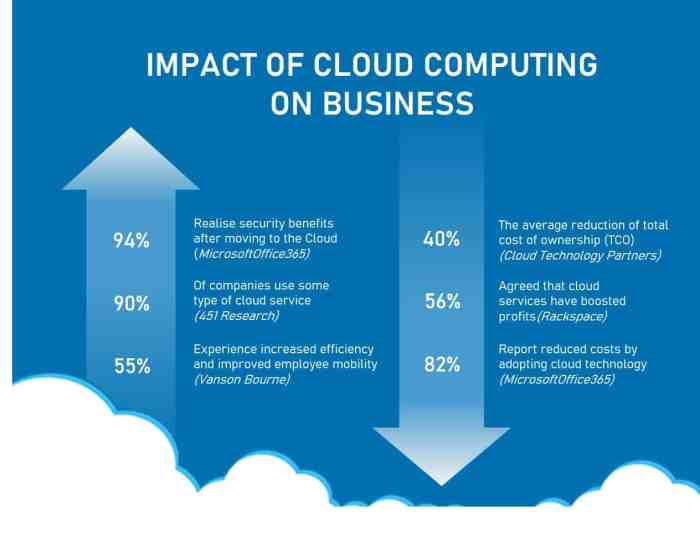
For instance, a study by Forrester Research found that enterprises using cloud services can save up to 30% on IT infrastructure costs. Moreover, a survey conducted by RightScale revealed that 82% of businesses experienced a reduction in IT costs after adopting cloud computing.




Elimination of Hardware Costs
Cloud computing eliminates the need for businesses to invest in and maintain physical servers, storage systems, and networking equipment. Instead, they can rent these resources from cloud providers on a pay-as-you-go basis, significantly reducing capital expenditures and freeing up resources for other business priorities.
Reduction in Software Licensing Fees
With cloud computing, businesses no longer need to purchase software licenses for each individual server or workstation. Instead, they can subscribe to cloud-based software services, which typically offer flexible pricing models and eliminate the need for upfront investments in software licenses.
Lower Maintenance and Support Costs
Cloud service providers handle the maintenance and support of their infrastructure, eliminating the need for businesses to hire dedicated IT staff for these tasks. This can result in significant cost savings, especially for small and medium-sized businesses with limited IT resources.
Scalability and Flexibility
Cloud computing offers businesses the ability to scale their IT resources up or down as needed, without investing in additional hardware. This scalability allows businesses to adapt to changing demands, such as seasonal traffic spikes or sudden business growth, without experiencing downtime or performance issues.
Benefits of Scalability and Flexibility
The scalability and flexibility of cloud computing provide several benefits for businesses, including:
- Cost Savings: Businesses can save money by only paying for the resources they use, rather than investing in hardware that may not be fully utilized.
- Improved Performance: Cloud computing providers offer access to powerful hardware and software, which can improve the performance of business applications.
- Increased Agility: Businesses can quickly and easily scale their IT resources to meet changing demands, which can help them respond to market opportunities or competitive threats.
- Improved Disaster Recovery: Cloud computing can help businesses recover from disasters more quickly and easily by providing access to backup data and applications in the cloud.
Improved Collaboration and Productivity

Cloud computing has revolutionized the way businesses operate, enabling seamless collaboration and enhanced productivity among employees. With cloud-based tools and applications, teams can work together effectively, regardless of their location or time zone.
Communication and File Sharing
Cloud-based communication and file-sharing platforms have transformed the way employees communicate and share information. These platforms allow team members to send instant messages, share files, and collaborate on projects in real-time. This eliminates the need for physical meetings and cumbersome email chains, resulting in improved communication efficiency and faster decision-making.
Project Management
Cloud-based project management tools provide a centralized platform for teams to plan, track, and manage projects. These tools allow team members to assign tasks, set deadlines, and monitor progress. They also facilitate easy communication and file sharing among team members, ensuring that everyone is on the same page and working towards common goals.
Remote Work and Flexibility
Cloud computing has made remote work a reality for many businesses. With cloud-based tools and applications, employees can access their work files and applications from anywhere with an internet connection. This flexibility allows businesses to hire talent from around the world and create a more diverse and inclusive workforce.
It also empowers employees to better manage their work-life balance and maintain a healthy work-life integration.
Enhanced Security
Cloud computing offers robust security features and protocols that safeguard businesses’ data and systems. These features include data encryption, access control, disaster recovery, and compliance with industry regulations.
Data Encryption
- Cloud providers employ encryption methods, such as AES-256, to protect data at rest and in transit.
- Encryption ensures that even if data is intercepted, it remains unreadable without the encryption key.
Access Control
- Cloud providers implement access control mechanisms, such as role-based access control (RBAC) and multi-factor authentication (MFA), to restrict access to data and resources.
- RBAC allows organizations to define user roles and assign specific permissions to each role.
- MFA requires users to provide multiple forms of identification, such as a password and a one-time code sent to their mobile device, to access sensitive data.
Disaster Recovery
- Cloud providers offer disaster recovery services that help businesses protect their data and applications from natural disasters, hardware failures, and other disruptions.
- These services replicate data and applications across multiple data centers, ensuring that they are always available, even in the event of a disaster.
Compliance with Regulations
- Cloud providers offer compliance solutions that help businesses meet industry regulations, such as HIPAA, PCI DSS, and GDPR.
- These solutions include tools and services that help businesses manage and monitor their compliance status.
Access to Advanced Technologies
Cloud computing offers businesses the ability to leverage cutting-edge technologies without the need for significant upfront investment in infrastructure or specialized expertise.
These technologies, such as artificial intelligence (AI), machine learning (ML), and big data analytics, can be easily integrated into cloud-based applications and services, enabling businesses to gain insights from data, automate processes, and make better decisions.
AI and ML for Data-Driven Insights
Cloud computing platforms provide businesses with access to powerful AI and ML tools and algorithms. These tools can be used to analyze large volumes of data, identify patterns and trends, and make predictions. This enables businesses to gain insights into customer behavior, market trends, and operational inefficiencies, helping them make data-driven decisions to improve their operations and strategies.
Big Data Analytics for Improved Decision-Making
Cloud computing enables businesses to store and process massive amounts of data in a cost-effective and scalable manner. This allows them to perform advanced analytics on their data to uncover hidden insights and patterns. With cloud-based big data analytics platforms, businesses can gain a comprehensive understanding of their customers, optimize their operations, and make informed decisions based on real-time data.
Disaster Recovery and Business Continuity
Cloud computing offers numerous advantages in ensuring business continuity during unexpected events or disruptions. By leveraging cloud-based backup and recovery solutions, businesses can minimize downtime, data loss, and operational disruptions.
Cloud-based Backup and Recovery Solutions
Cloud-based backup and recovery solutions provide a reliable and secure method for protecting critical business data and applications. These solutions enable businesses to replicate and store data in multiple remote locations, ensuring data redundancy and accessibility even in the event of a disaster or hardware failure.
Benefits of Cloud-based Backup and Recovery:
- Reduced Downtime: Rapid recovery of data and applications minimizes downtime, allowing businesses to resume operations quickly after a disruptive event.
- Data Protection: Offsite data storage in the cloud protects data from physical disasters, such as fire, flood, or natural calamities.
- Scalability: Cloud-based backup and recovery solutions can easily scale to accommodate growing data volumes, ensuring adequate protection as businesses expand.
- Cost-effectiveness: Cloud-based solutions eliminate the need for expensive on-premises backup infrastructure, reducing capital expenditures and ongoing maintenance costs.
Enhanced Business Continuity Planning:
Cloud computing enables businesses to develop comprehensive business continuity plans that address various disaster scenarios. These plans Artikel the steps to be taken, roles and responsibilities of personnel, and communication protocols to ensure a swift and effective response to disruptions.
Improved Customer Service
Cloud computing empowers businesses to elevate customer service by providing seamless access to customer data and enabling support from any location. Businesses can leverage cloud-based customer relationship management (CRM) systems to centralize and manage customer interactions, fostering improved customer satisfaction and loyalty.
Seamless Customer Data Access
Cloud-based CRM systems allow customer service representatives to access customer data from anywhere, anytime. This eliminates the need for manual searching through disparate systems, reducing response time and improving the overall customer experience. Furthermore, cloud-based CRM systems enable real-time data updates, ensuring that customer service representatives always have the most current information at their fingertips.
Personalized Customer Interactions
Cloud-based CRM systems facilitate the collection and analysis of customer data, enabling businesses to gain valuable insights into customer preferences, behaviors, and pain points. This information can be leveraged to personalize customer interactions, tailoring products, services, and support to meet individual customer needs.
Personalized interactions foster stronger customer relationships, leading to increased satisfaction and loyalty.
Enhanced Collaboration and Communication
Cloud-based CRM systems promote collaboration and communication among customer service teams. Team members can easily share customer information, notes, and updates, ensuring that everyone is on the same page. This streamlined communication enhances the efficiency of customer service operations, enabling teams to resolve customer issues quickly and effectively.
Case Study: Salesforce CRM
Salesforce, a leading cloud-based CRM provider, has empowered numerous businesses to enhance customer service. For instance, Adidas utilized Salesforce to centralize customer data and provide personalized experiences across multiple channels. This resulted in a 40% increase in customer satisfaction and a significant boost in sales.
Innovation and Competitive Advantage

Cloud computing empowers businesses to innovate and gain a competitive edge by providing access to cutting-edge technologies and enabling rapid development and deployment of new products and services.
With cloud computing, businesses can:
Access to Cutting-Edge Technologies
- Leverage emerging technologies such as artificial intelligence, machine learning, and data analytics to enhance their products and services.
- Stay updated with the latest technological advancements without investing heavily in infrastructure.
- Experiment with new technologies in a cost-effective manner, fostering innovation and driving growth.
Rapid Development and Deployment
- Accelerate the development process by utilizing cloud-based tools and platforms, reducing time-to-market.
- Simplify the deployment process by leveraging cloud-based infrastructure, enabling businesses to launch new products and services quickly and efficiently.
- Respond swiftly to changing market demands and customer preferences by iterating and updating products and services rapidly.
Examples of Innovation
- Netflix utilized cloud computing to revolutionize the streaming industry, offering a vast library of content to users worldwide.
- Airbnb leveraged cloud computing to create a global marketplace for short-term rentals, disrupting the traditional hospitality industry.
- Amazon Web Services (AWS) provides a cloud platform that enables businesses of all sizes to build and deploy applications quickly and easily, fostering innovation across industries.
Final Conclusion
In conclusion, cloud computing stands as a cornerstone of modern business success. Its ability to optimize costs, enhance scalability, improve collaboration, bolster security, provide access to advanced technologies, ensure business continuity, elevate customer service, and drive innovation makes it an indispensable tool for businesses seeking to thrive in the digital age.
By embracing cloud computing, businesses can unlock new possibilities, gain a competitive edge, and position themselves for long-term growth and prosperity.