Cost-Effective Infrastructure
Cloud computing offers a cost-effective alternative to traditional IT infrastructure by eliminating the need for expensive hardware, data centers, and IT staff. Businesses can significantly reduce their IT costs by migrating to the cloud and leveraging its scalable and pay-as-you-go pricing model.





Numerous businesses have realized substantial cost savings by adopting cloud computing. For example, Netflix, a leading streaming service, saved millions of dollars by migrating its infrastructure to the cloud. By eliminating the need for physical servers and data centers, Netflix was able to reduce its IT costs while improving its scalability and performance.
Case Studies:
- Adobe: By migrating to the cloud, Adobe reduced its IT costs by 30% and improved its operational efficiency. The company was able to redirect the savings towards innovation and new product development.
- General Electric (GE): GE saved over $1 billion in IT costs by moving its applications and data to the cloud. The company was able to consolidate its IT infrastructure and reduce its data center footprint, resulting in significant cost savings.
- Spotify: Spotify’s migration to the cloud enabled the company to scale its infrastructure quickly and cost-effectively. By leveraging the cloud’s elasticity, Spotify was able to handle sudden spikes in demand without incurring additional hardware costs.
Scalability and Flexibility
Cloud computing offers businesses the ability to scale their IT resources up or down as needed, providing a cost-effective solution that can adapt to changing business demands. This scalability and flexibility allow companies to respond quickly to market fluctuations, seize new opportunities, and optimize their IT infrastructure for maximum efficiency.
Seamless Scaling
With cloud computing, businesses can easily increase or decrease their IT resources, such as storage, processing power, and bandwidth, to meet changing demands. This eliminates the need for costly over-provisioning or the risk of under-provisioning, resulting in significant cost savings and improved resource utilization.
Adaptability to Market Dynamics
The dynamic nature of the cloud enables businesses to respond swiftly to market changes and seize new opportunities. For instance, an e-commerce company can scale up its IT infrastructure during peak shopping seasons to handle increased traffic and sales. Similarly, a software company can quickly provision additional resources to support the launch of a new product or service.
Real-World Examples
- Netflix: Netflix’s streaming platform relies heavily on cloud computing to deliver content to millions of users worldwide. The company’s ability to scale its infrastructure up and down based on demand has been crucial in accommodating fluctuations in viewership, ensuring a seamless streaming experience for its customers.
- Airbnb: Airbnb’s cloud-based platform enables it to manage a vast network of hosts and guests, process reservations, and handle payments. The company’s ability to scale its infrastructure as needed has been instrumental in supporting its rapid growth and global expansion.
Improved IT Efficiency
Cloud computing revolutionizes IT operations by streamlining processes, reducing administrative burdens, and enhancing overall efficiency. By leveraging cloud-based services, organizations can automate routine IT tasks, freeing up IT staff to focus on strategic initiatives that drive business growth and innovation.
Automated IT Tasks
Cloud computing platforms offer a range of tools and services that automate various IT tasks, including:
- Server and infrastructure management: Cloud providers handle the setup, maintenance, and updates of servers, storage, and networking infrastructure, eliminating the need for manual intervention.
- Software updates and patching: Cloud-based applications automatically receive updates and security patches, ensuring that systems are always up-to-date and secure.
- Data backup and recovery: Cloud services provide automated backup and recovery solutions, protecting data from loss or corruption.
- Security monitoring and threat detection: Cloud platforms offer advanced security features that continuously monitor for threats and vulnerabilities, reducing the risk of breaches and data loss.
Empowering IT Staff
By automating routine tasks, cloud computing frees up IT staff to focus on more strategic initiatives that align with business objectives, such as:
- Innovation and development: IT teams can dedicate more time to developing new applications, services, and solutions that drive business growth.
- Customer-centric initiatives: IT staff can focus on improving customer experiences by enhancing digital channels, optimizing websites, and providing better support.
- Data analytics and insights: With more time available, IT professionals can analyze data to gain valuable insights, identify trends, and make data-driven decisions.
- Strategic planning and alignment: IT teams can actively participate in strategic planning and decision-making, ensuring that technology investments align with overall business goals.
Examples of Cloud-Based Tools and Services
Numerous cloud-based tools and services enhance IT efficiency and productivity:
- Infrastructure as a Service (IaaS): IaaS providers offer virtualized computing resources, such as servers, storage, and networking, allowing organizations to scale their IT infrastructure on demand.
- Platform as a Service (PaaS): PaaS platforms provide a complete development and deployment environment, enabling developers to build, test, and deploy applications quickly and easily.
- Software as a Service (SaaS): SaaS applications are hosted and managed by the provider, eliminating the need for organizations to install and maintain software on their own systems.
- Cloud management tools: Cloud management tools provide centralized visibility and control over cloud resources, enabling IT teams to monitor usage, optimize costs, and ensure compliance.
Enhanced Data Security
Cloud computing offers robust data security measures, safeguarding sensitive information from unauthorized access, data breaches, and security threats. It employs advanced security protocols, including encryption, access control, and disaster recovery mechanisms, to ensure data integrity and compliance with industry regulations.
Compared to traditional on-premises IT infrastructure, cloud computing provides enhanced data security due to:
- Centralized Security Management: Cloud providers manage security centrally, applying security patches and updates promptly, reducing the risk of vulnerabilities.
- Encryption: Data is encrypted at rest and in transit, ensuring confidentiality and preventing unauthorized access.
- Access Control: Granular access control mechanisms allow organizations to define user roles and permissions, restricting access to authorized individuals only.
- Disaster Recovery: Cloud platforms offer built-in disaster recovery capabilities, enabling organizations to recover data and applications quickly in case of hardware failures or natural disasters.
Case Studies:
- Adobe: By migrating to the cloud, Adobe improved its security posture and compliance with industry regulations, reducing the risk of data breaches and enhancing overall data security.
- General Electric: GE leveraged cloud computing to centralize its security management, reducing the time to detect and respond to security threats, resulting in improved data security.
Reduced Downtime and Improved Business Continuity
Cloud computing offers robust solutions to minimize downtime and ensure business continuity, empowering organizations to maintain operations even during disruptions. Cloud-based disaster recovery solutions provide rapid recovery from disruptions, enabling businesses to restore critical systems and data swiftly.
Cloud-Based Disaster Recovery Solutions
Cloud-based disaster recovery solutions offer several advantages over traditional on-premises disaster recovery methods:
- Rapid Recovery: Cloud-based solutions allow organizations to recover systems and data quickly, minimizing downtime and disruption to business operations.
- Scalability: Cloud platforms provide the flexibility to scale resources up or down as needed, ensuring that organizations can meet changing recovery demands.
- Cost-Effectiveness: Cloud-based disaster recovery solutions can be more cost-effective than traditional on-premises solutions, as organizations only pay for the resources they use.
- Enhanced Security: Cloud providers typically have robust security measures in place, ensuring the protection of critical data and systems during a disaster.
Real-Life Examples of Business Continuity with Cloud Computing
Several businesses have successfully leveraged cloud computing to maintain business continuity during crises:
- Amazon Web Services (AWS): During the COVID-19 pandemic, AWS helped numerous businesses maintain operations by providing scalable and reliable cloud infrastructure. For instance, Zoom, a video conferencing platform, experienced a surge in demand during the pandemic. AWS enabled Zoom to scale its infrastructure rapidly, supporting the increased usage and ensuring uninterrupted service.
- Microsoft Azure: Microsoft Azure played a crucial role in helping organizations maintain business continuity during the pandemic. For example, healthcare provider Kaiser Permanente used Azure to quickly deploy a virtual desktop infrastructure (VDI) solution, enabling employees to securely access their desktops and applications from anywhere.
Innovation and Competitive Advantage
Cloud computing is a powerful tool that can help businesses innovate and gain a competitive advantage. By providing access to scalable, flexible, and cost-effective IT resources, cloud computing can empower businesses to experiment with new ideas, develop new products and services, and enter new markets more quickly and easily.
Fostering Collaboration and Experimentation
Cloud computing enables businesses to foster collaboration and experimentation by providing a shared platform that allows employees, partners, and customers to access and share data and applications from anywhere in the world. This can lead to the development of new ideas, products, and services that would not have been possible without the cloud.
Rapid Product Development
Cloud computing can also help businesses accelerate product development by providing access to powerful computing resources that can be used to run simulations, test new features, and conduct market research. This can help businesses bring new products to market more quickly and efficiently.
Examples of Innovation and Business Success
Many companies have used cloud computing to drive innovation and achieve business success. For example, Netflix uses the cloud to deliver streaming video to its customers, Amazon Web Services (AWS) provides cloud computing services to businesses of all sizes, and Airbnb uses the cloud to connect hosts and guests around the world.
These are just a few examples of how cloud computing can be used to innovate and gain a competitive advantage.
Last Word
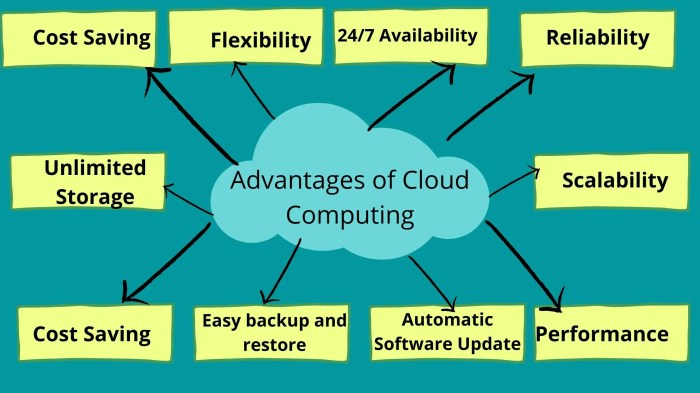
In conclusion, cloud computing presents a compelling solution for businesses seeking to optimize IT costs, enhance agility, and drive innovation. By embracing the cloud, organizations can unlock a wealth of benefits, including cost savings, scalability, improved efficiency, enhanced data security, reduced downtime, and a competitive advantage.
As the world continues to evolve at an unprecedented pace, cloud computing stands as a cornerstone of digital transformation, enabling businesses to thrive in the face of disruption and achieve long-term success.