Cost Savings
Cloud computing offers significant cost savings for businesses by eliminating the need for expensive on-premises IT infrastructure and maintenance. Companies can avoid the upfront costs of purchasing and maintaining hardware, software, and data centers. Instead, they can rent these resources from cloud service providers on a pay-as-you-go basis, only paying for the resources they use.
This can lead to substantial savings in IT costs.




Hardware Savings
Cloud computing eliminates the need for businesses to purchase and maintain their own hardware, such as servers, storage devices, and network equipment. Instead, they can rent these resources from cloud service providers, which can significantly reduce hardware costs.
Software Savings
With cloud computing, businesses can avoid the costs of purchasing and licensing software applications. Instead, they can use software-as-a-service (SaaS) applications, which are hosted and managed by cloud service providers. This can save businesses money on software licenses and maintenance fees.
IT Staff Savings
Cloud computing can reduce the need for businesses to hire and maintain a large IT staff. Instead, they can rely on cloud service providers to manage and maintain their IT infrastructure, which can save money on salaries, benefits, and training costs.
Pay-as-you-go Pricing
One of the key benefits of cloud computing is its pay-as-you-go pricing model. This means that businesses only pay for the resources they use, rather than paying a fixed monthly or annual fee. This can lead to significant savings, especially for businesses with fluctuating IT needs.
Scalability and Flexibility
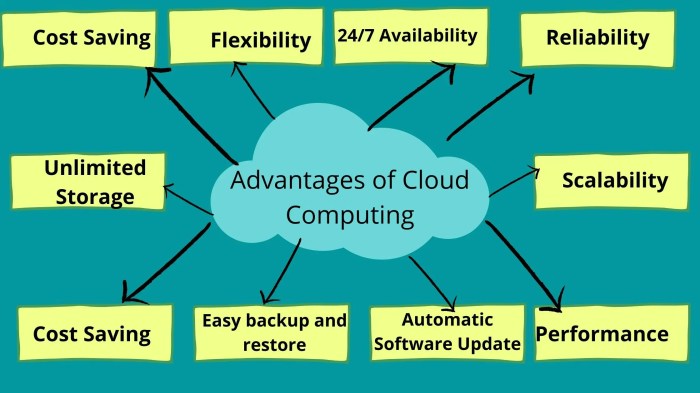
Cloud computing offers businesses the ability to scale their IT resources easily and quickly based on demand. This means that companies can add or remove resources as needed, without having to invest in new hardware or software. This scalability is especially beneficial for businesses that experience seasonal fluctuations in demand or that are rapidly growing.
Flexibility in Storage, Processing Power, and Bandwidth
Cloud services provide flexibility in terms of storage, processing power, and bandwidth. This allows companies to adapt to changing needs, such as spikes in demand or the need to process large amounts of data. For example, a company that experiences a sudden increase in website traffic can easily scale up its cloud resources to handle the additional load.
Real-World Examples
*
-*Netflix
Netflix uses cloud computing to deliver its streaming video content to millions of users around the world. The company’s cloud infrastructure allows it to scale its resources up or down based on demand, ensuring that users have a consistent and high-quality experience.
-
-*Amazon
Amazon uses cloud computing to power its e-commerce platform, which handles millions of orders per day. The company’s cloud infrastructure allows it to scale its resources up or down based on demand, ensuring that customers have a fast and reliable shopping experience.
Google uses cloud computing to power its search engine, which handles billions of searches per day. The company’s cloud infrastructure allows it to scale its resources up or down based on demand, ensuring that users have a fast and accurate search experience.
Improved Collaboration and Accessibility
Cloud computing has revolutionized the way teams and departments within an organization collaborate and access data. By centralizing data and applications in a cloud-based environment, organizations can foster seamless collaboration and enhance accessibility for employees, regardless of their location or device.
Cloud-based tools and platforms provide real-time access to shared documents, calendars, and project management tools, enabling teams to work together efficiently and effectively. Remote work has become more feasible and productive, as employees can securely access the necessary resources from anywhere with an internet connection.
Benefits of Cloud-based Collaboration Tools
- Enhanced Communication: Cloud-based collaboration tools facilitate real-time communication through chat, video conferencing, and messaging, breaking down geographical barriers and enabling seamless communication among team members.
- Centralized Data Access: Cloud computing provides a centralized repository for data and applications, ensuring that all authorized users have up-to-date access to the same information. This eliminates data silos and ensures consistency across departments.
- Improved Document Management: Cloud-based document management systems allow teams to easily store, share, and collaborate on documents. Version control features ensure that everyone is working on the latest version of a document, reducing errors and rework.
- Project Management and Tracking: Cloud-based project management tools provide a centralized platform for teams to plan, track, and manage projects. Real-time updates and progress tracking help teams stay organized and accountable.
Examples of Successful Implementations
- Salesforce: Salesforce, a cloud-based customer relationship management (CRM) platform, has enabled sales teams to collaborate more effectively, track customer interactions, and manage sales pipelines from anywhere.
- Google Workspace: Google Workspace, a suite of cloud-based productivity tools, has transformed collaboration for teams of all sizes. It offers real-time document editing, shared calendars, and video conferencing, enhancing productivity and streamlining communication.
- Slack: Slack, a cloud-based team communication tool, has revolutionized the way teams communicate and share information. It provides persistent chat rooms, file sharing, and integrations with other cloud-based tools, fostering a more collaborative and productive work environment.
Enhanced Security and Compliance
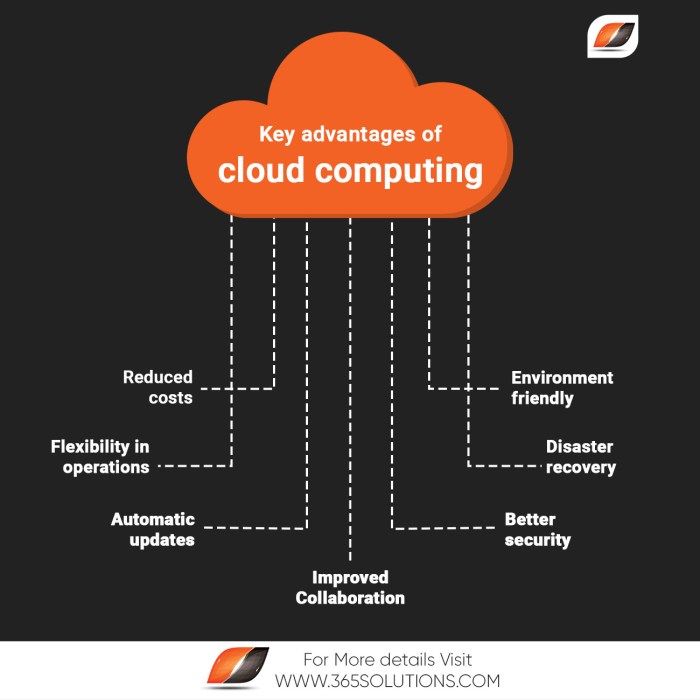
Cloud computing offers enhanced security and compliance features that protect data and applications from unauthorized access, theft, or damage. Cloud service providers implement various security measures, such as encryption, multi-factor authentication, and intrusion detection systems, to ensure the confidentiality, integrity, and availability of data.
Compliance and Regulatory Requirements
Cloud computing enables businesses to meet regulatory requirements and industry standards more efficiently. Cloud providers offer compliance certifications and attestations, such as ISO 27001, SOC 2, and HIPAA, which demonstrate their adherence to specific security and privacy standards. This helps businesses comply with regulations and reduce the risk of data breaches or non-compliance.
Innovation and Agility
Cloud computing accelerates innovation by offering access to cutting-edge technologies and platforms, enabling businesses to explore new ideas and bring products and services to market faster.
Rapid Access to Advanced Technologies:
- Cloud computing provides businesses with access to advanced technologies such as artificial intelligence, machine learning, blockchain, and the Internet of Things (IoT) without the need for extensive investments in infrastructure and expertise.
- This allows companies to experiment with these technologies quickly and cost-effectively, leading to the development of innovative products and services.
Adaptability to Changing Market Trends:
- Cloud computing enables businesses to quickly adapt to changing market trends and customer demands by providing the flexibility to scale resources up or down as needed.
- This agility allows companies to respond to market changes promptly, gain a competitive advantage, and stay ahead of the curve.
Examples of Innovation and Agility:
- Netflix: Netflix transformed the entertainment industry by leveraging cloud computing to deliver streaming video content to its subscribers, revolutionizing the way people consume media.
- Uber: Uber disrupted the transportation industry by using cloud computing to connect riders with drivers efficiently, creating a new and convenient way for people to get around.
Data Analytics and Insights
Cloud computing has revolutionized the way businesses collect, store, and analyze data. With cloud-based platforms, companies can access powerful data analytics tools and resources that enable them to gain valuable insights from their data, leading to improved decision-making and optimized operations.
Scalable Data Storage and Processing
Cloud platforms provide scalable storage and processing capabilities, allowing businesses to handle large volumes of data without worrying about infrastructure limitations. This scalability enables companies to store and analyze vast amounts of data, including structured and unstructured data, without investing in expensive on-premises infrastructure.
Cost-Effective Data Analytics
Cloud computing offers cost-effective data analytics solutions compared to traditional on-premises data centers. Businesses can pay-as-they-go for cloud services, eliminating the need for upfront investments in hardware, software, and IT staff. Additionally, cloud providers offer various pricing models, allowing companies to choose the option that best suits their budget and usage requirements.
Enhanced Collaboration and Accessibility
Cloud-based data analytics platforms enable teams to collaborate and access data from anywhere with an internet connection. This facilitates real-time data sharing, analysis, and insights generation, fostering better decision-making and improving overall productivity.
Advanced Analytics and Machine Learning
Cloud platforms offer advanced analytics capabilities, including machine learning and artificial intelligence (AI), which help businesses extract meaningful insights from complex data. These technologies enable companies to identify patterns, trends, and correlations in their data, leading to improved forecasting, predictive analytics, and automated decision-making.
Real-Time Data Analysis
Cloud computing enables real-time data analysis, allowing businesses to monitor and respond to changing conditions quickly. With real-time data insights, companies can identify opportunities, mitigate risks, and make informed decisions based on the latest information.
Last Word
In conclusion, cloud computing presents a multitude of benefits that can transform businesses of all sizes. From cost optimization and scalability to enhanced collaboration and security, cloud adoption unlocks a world of opportunities for organizations seeking to thrive in the digital era.
As cloud technology continues to evolve, businesses that embrace its transformative power will be well-positioned to navigate the challenges and seize the opportunities of the ever-changing business landscape.