Hybrid and Multi-Cloud Strategies
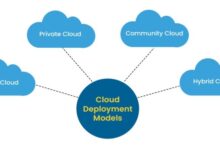
The IT landscape has witnessed a surge in the adoption of hybrid and multi-cloud strategies by organizations seeking flexibility, agility, and cost optimization. This trend is driven by the need to diversify cloud services across multiple providers, enabling businesses to leverage the unique strengths and offerings of each platform.
Diversifying cloud services across multiple providers offers several advantages. It enhances resilience and reliability by eliminating reliance on a single vendor. Organizations can select the most suitable cloud platform for specific workloads or applications, optimizing performance and cost. Additionally, multi-cloud strategies facilitate compliance with regulations and data sovereignty requirements, as data can be stored and processed in geographically distributed cloud regions.




Challenges in Hybrid and Multi-Cloud Environments
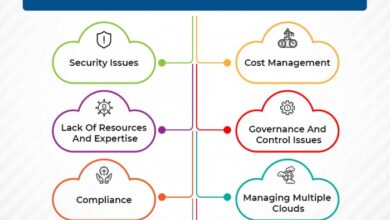
While hybrid and multi-cloud strategies offer numerous benefits, they also present challenges and complexities. Managing multiple cloud environments requires specialized skills and expertise, as organizations must navigate the nuances of different platforms, tools, and APIs. Additionally, ensuring data security and governance across diverse cloud environments can be intricate, requiring robust policies and procedures.
Another challenge lies in maintaining consistent performance and availability across hybrid and multi-cloud environments. Organizations must address network latency, data transfer costs, and potential compatibility issues between different cloud platforms. Effective monitoring and management tools are essential to ensure optimal performance and minimize disruptions.
Serverless Computing
Serverless computing is a cloud computing paradigm where cloud providers manage the underlying infrastructure, including servers, operating systems, and runtime environments. Developers can build and deploy applications without worrying about the underlying infrastructure, resulting in faster development cycles, reduced operational costs, and improved scalability.
Function-as-a-Service (FaaS)
Function-as-a-Service (FaaS) is a key component of serverless computing. FaaS allows developers to write and deploy individual functions without worrying about managing servers or infrastructure. These functions are typically short-lived and can be triggered by various events, such as HTTP requests, message queues, or scheduled events.
FaaS providers manage the underlying infrastructure and scaling, enabling developers to focus on writing code.
Benefits of Serverless Computing
- Reduced Operational Costs: Serverless computing eliminates the need for developers to manage and maintain servers, resulting in significant cost savings.
- Improved Scalability: Serverless architectures scale automatically based on demand, ensuring that applications can handle increased traffic without performance degradation.
- Faster Development Cycles: Developers can focus on writing code without worrying about infrastructure, leading to faster development and deployment cycles.
- Increased Agility: Serverless computing enables organizations to respond quickly to changing market demands and business requirements.
Challenges and Considerations
- Vendor Lock-in: Organizations may become dependent on a specific cloud provider’s serverless platform, limiting their ability to switch providers.
- Limited Control: Developers may have limited control over the underlying infrastructure, which can impact application performance and security.
- Debugging and Monitoring: Serverless applications can be challenging to debug and monitor due to the distributed nature of the underlying infrastructure.
- Cost Management: Organizations need to carefully manage their serverless usage to avoid unexpected costs.
Conclusion
Serverless computing offers significant benefits for developers and organizations, enabling faster development cycles, reduced operational costs, and improved scalability. However, organizations should carefully consider the challenges and limitations of serverless computing before adopting it for their applications.
Edge Computing

Edge computing is a distributed computing paradigm that brings computation and data storage closer to the devices and users, enabling faster processing and reduced latency. It extends cloud computing services to the edge of the network, where data is generated and consumed, offering several advantages and applications across industries.
Benefits and Applications
Edge computing provides numerous benefits, including:
- Reduced Latency: Processing data closer to the source minimizes latency, improving user experience and enabling real-time applications.
- Improved Bandwidth Utilization: By reducing the volume of data transferred to the cloud, edge computing optimizes bandwidth utilization and reduces network congestion.
- Enhanced Data Security: Keeping data local and reducing its transmission over public networks enhances data security and privacy.
- Increased Scalability: Edge computing allows for distributed scalability, enabling businesses to scale their infrastructure and services as needed.
Edge computing finds applications in various industries, including:
- Manufacturing: Edge devices can monitor production processes, optimize operations, and enable predictive maintenance.
- Retail: Edge computing can power self-checkout kiosks, provide real-time inventory tracking, and enhance customer experiences.
- Healthcare: Edge devices can collect patient data, facilitate remote monitoring, and enable telemedicine.
- Transportation: Edge computing supports autonomous vehicles, traffic management systems, and fleet management solutions.
Challenges and Limitations
Despite its advantages, edge computing faces certain challenges:
- Resource Constraints: Edge devices often have limited processing power, memory, and storage capacity, requiring careful resource management.
- Security Concerns: Distributing data and services across multiple edge devices increases the attack surface, requiring robust security measures.
- Interoperability and Standards: Lack of standardization can hinder interoperability between different edge devices and platforms.
- Data Management: Coordinating and managing data across numerous edge devices can be complex, especially for large-scale deployments.
Artificial Intelligence and Machine Learning in the Cloud
Artificial Intelligence (AI) and Machine Learning (ML) are rapidly transforming the cloud computing landscape, offering businesses new opportunities to leverage data and automate processes. By integrating AI and ML services with cloud computing platforms, organizations can access powerful tools and resources to enhance their applications, improve decision-making, and drive innovation.
Benefits of AI and ML in Cloud-Based Applications
The integration of AI and ML in cloud-based applications brings numerous benefits, including:
- Enhanced Data Analysis: AI and ML algorithms can analyze vast amounts of data quickly and accurately, identifying patterns and insights that may be missed by humans.
- Improved Decision-Making: AI-powered applications can provide real-time recommendations and predictions, enabling businesses to make informed decisions based on data-driven insights.
- Automated Processes: ML algorithms can automate repetitive tasks, freeing up human resources to focus on more strategic and creative endeavors.
- Personalized Experiences: AI can analyze user behavior and preferences to deliver personalized experiences, enhancing customer satisfaction and engagement.
- Increased Efficiency: AI and ML can optimize resource allocation and streamline processes, leading to increased efficiency and cost savings.
Examples of AI and ML Transforming Cloud Computing Services and Applications
AI and ML are revolutionizing cloud computing services and applications across various industries:
- Healthcare: AI-powered cloud platforms analyze patient data to provide personalized treatment plans, automate administrative tasks, and support medical research.
- Finance: ML algorithms are used to detect fraud, assess creditworthiness, and provide personalized financial advice.
- Retail: AI helps retailers analyze customer behavior, optimize supply chains, and provide personalized recommendations.
- Manufacturing: ML algorithms are used for predictive maintenance, quality control, and optimizing production processes.
- Transportation: AI powers self-driving cars, optimizes traffic flow, and enhances logistics operations.
In summary, the integration of AI and ML with cloud computing platforms is driving innovation and transforming industries. By leveraging the power of AI and ML, businesses can unlock new opportunities for growth, improve efficiency, and deliver enhanced customer experiences.
Cloud Security and Compliance
As cloud computing becomes increasingly prevalent, ensuring the security and compliance of data and applications in cloud environments has become paramount. The shared responsibility model for cloud security defines the roles and responsibilities of cloud providers and customers in maintaining the security of cloud-based systems.
Evolving Security Concerns and Challenges
The evolving nature of cloud computing introduces unique security challenges that require continuous attention and mitigation strategies. These challenges include:
- Increased Attack Surface: The distributed nature of cloud environments expands the attack surface, making it more vulnerable to cyber threats.
- Data Security: Ensuring the confidentiality, integrity, and availability of sensitive data stored in the cloud is a critical concern.
- Compliance Requirements: Organizations must adhere to various industry regulations and compliance standards, which can be complex and challenging to implement in cloud environments.
- Insider Threats: The insider threat remains a significant concern, as malicious insiders with authorized access can pose a risk to cloud-based systems.
Shared Responsibility Model for Cloud Security
The shared responsibility model for cloud security defines the respective responsibilities of cloud providers and customers in securing cloud environments. Cloud providers are responsible for the security of the underlying cloud infrastructure, while customers are responsible for securing their data, applications, and configurations within the cloud environment.
This shared responsibility model requires close collaboration between cloud providers and customers to ensure comprehensive security. Cloud providers offer a range of security features and services to assist customers in securing their cloud environments, while customers must adopt best practices and implement appropriate security measures to protect their assets.
Best Practices and Strategies for Securing Cloud-Based Data and Applications
To effectively secure cloud-based data and applications, organizations should adopt a comprehensive approach that includes the following best practices and strategies:
- Encryption: Encrypt data both at rest and in transit to protect it from unauthorized access.
- Identity and Access Management (IAM): Implement robust IAM controls to manage user access and permissions.
- Vulnerability Management: Regularly scan and patch cloud systems and applications for vulnerabilities.
- Logging and Monitoring: Enable logging and monitoring to detect and respond to security incidents promptly.
- Security Awareness and Training: Educate employees about cloud security risks and best practices.
Containerization and Microservices
In the realm of cloud computing, containerization and microservices have emerged as transformative paradigms, reshaping the way applications are developed, deployed, and managed.
Containerization involves packaging an application and its dependencies into a standalone, executable unit known as a container. This approach offers numerous advantages, including increased portability, scalability, and agility.
Benefits of Containerization
- Portability: Containers can be easily moved across different environments, including on-premises data centers, public clouds, and hybrid cloud setups.
- Scalability: Containerized applications can be scaled up or down quickly and efficiently, enabling dynamic resource allocation based on demand.
- Agility: Containers facilitate rapid application development and deployment cycles, enabling teams to deliver new features and updates more frequently.
To effectively manage and orchestrate containerized applications, container orchestration platforms such as Kubernetes have gained widespread adoption. Kubernetes provides a centralized platform for automating the deployment, scaling, and management of containerized applications, ensuring high availability and reliability.
Microservices Architecture
Microservices architecture involves decomposing an application into a collection of loosely coupled, independently deployable services. This approach offers several advantages, including improved modularity, fault isolation, and scalability.
- Modularity: Microservices architecture enables the development and maintenance of individual services independently, promoting modularity and code reusability.
- Fault Isolation: If one microservice fails, it does not affect the functionality of other microservices, enhancing the overall resilience and stability of the application.
- Scalability: Microservices can be scaled independently, allowing for fine-grained resource allocation and optimization.
However, adopting a microservices architecture also presents challenges, including increased complexity in managing distributed systems and the need for robust inter-service communication mechanisms.
Quantum Computing and Cloud
Quantum computing presents a paradigm shift in computing, harnessing the principles of quantum mechanics to solve complex problems intractable for classical computers. Its integration with cloud computing promises transformative potential, offering new avenues for innovation and efficiency gains.
Challenges and Opportunities
Quantum computing introduces both challenges and opportunities for cloud providers and users.
- Quantum-Safe Cryptography: Transitioning to quantum-safe cryptography is essential to safeguard data and communications in the era of quantum computing.
- Scalability and Cost: Building and maintaining quantum computers is a resource-intensive endeavor, presenting scalability and cost challenges.
- Quantum Algorithms: Developing and optimizing quantum algorithms for practical applications is a complex and ongoing task.
Despite these challenges, quantum computing offers significant opportunities:
- Enhanced Optimization: Quantum algorithms excel in solving optimization problems, potentially revolutionizing fields such as logistics, finance, and drug discovery.
- Accelerated Machine Learning: Quantum computing can expedite machine learning processes, enabling faster training and more accurate predictions.
- Novel Materials and Pharmaceuticals: Quantum simulations can aid in the design and discovery of novel materials and pharmaceuticals, accelerating scientific advancements.
Applications in Cloud-Based Services
The integration of quantum computing with cloud-based services opens up a realm of potential applications:
- Quantum-as-a-Service: Cloud providers can offer quantum computing resources as a service, enabling users to access and utilize quantum computing capabilities without the need for specialized infrastructure.
- Quantum-Enhanced Cloud Services: Existing cloud services can be enhanced with quantum computing capabilities, offering improved performance and efficiency.
- Hybrid Quantum-Classical Computing: Hybrid approaches combining quantum and classical computing can leverage the strengths of both paradigms, addressing complex problems more effectively.
Sustainability and Green Cloud Computing
The rise of cloud computing has brought significant environmental concerns due to its massive energy consumption and carbon footprint. In response, sustainability and green initiatives are gaining prominence in the cloud computing industry, with cloud providers and organizations alike focusing on reducing their environmental impact.
Role of Cloud Providers
Cloud providers play a crucial role in promoting sustainable cloud computing practices. They are investing in renewable energy sources, improving energy efficiency in their data centers, and implementing innovative technologies to minimize carbon emissions.
Renewable Energy Adoption
Many cloud providers have committed to using renewable energy sources such as solar, wind, and hydropower to power their data centers. This shift towards clean energy reduces the reliance on fossil fuels and lowers greenhouse gas emissions.
Energy-Efficient Data Centers
Cloud providers are optimizing their data centers for energy efficiency through measures like server virtualization, efficient cooling systems, and intelligent power management. These efforts reduce energy consumption and lower operational costs.
Green Cloud Certifications
Several cloud providers have obtained green cloud certifications, such as the ISO 14001 Environmental Management System certification, demonstrating their commitment to sustainable practices.
Challenges and Opportunities for Organizations
Organizations adopting cloud computing services have both challenges and opportunities in implementing sustainable practices:
Challenge
Carbon Footprint Measurement: Measuring the carbon footprint associated with cloud usage can be complex due to the shared infrastructure and dynamic nature of cloud services. Organizations need transparent reporting mechanisms from cloud providers to accurately assess their environmental impact.
Opportunity
Cost Savings: Sustainable cloud computing practices can lead to cost savings for organizations. By optimizing resource utilization, reducing energy consumption, and leveraging energy-efficient cloud services, organizations can lower their operational expenses.
Opportunity
Improved Brand Reputation: Adopting sustainable cloud computing practices can enhance an organization’s brand reputation and attract environmentally conscious customers and partners.
Closure
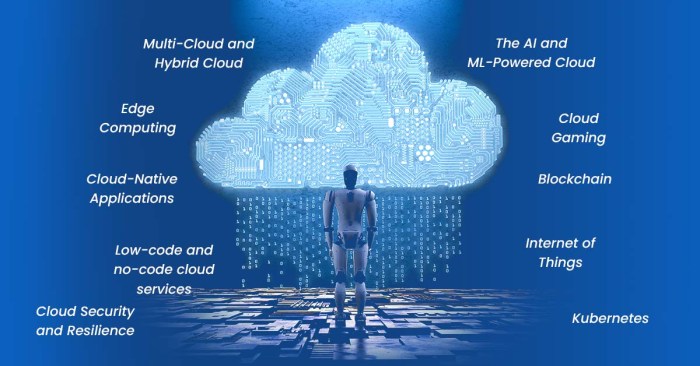
As we conclude our exploration of the emerging trends in cloud computing, it is evident that the future of this transformative technology holds immense promise. The convergence of hybrid and multi-cloud strategies, serverless computing, edge computing, AI and ML integration, and containerization is redefining the way businesses operate and innovate.
Moreover, the focus on cloud security, compliance, and sustainability ensures that organizations can harness the power of the cloud with confidence and responsibility.
As these trends continue to evolve, businesses must remain agile and adaptable to embrace the opportunities they present. By staying abreast of these advancements and leveraging their capabilities, organizations can unlock new levels of efficiency, innovation, and competitiveness in the digital age.